An Inspiring Memoir

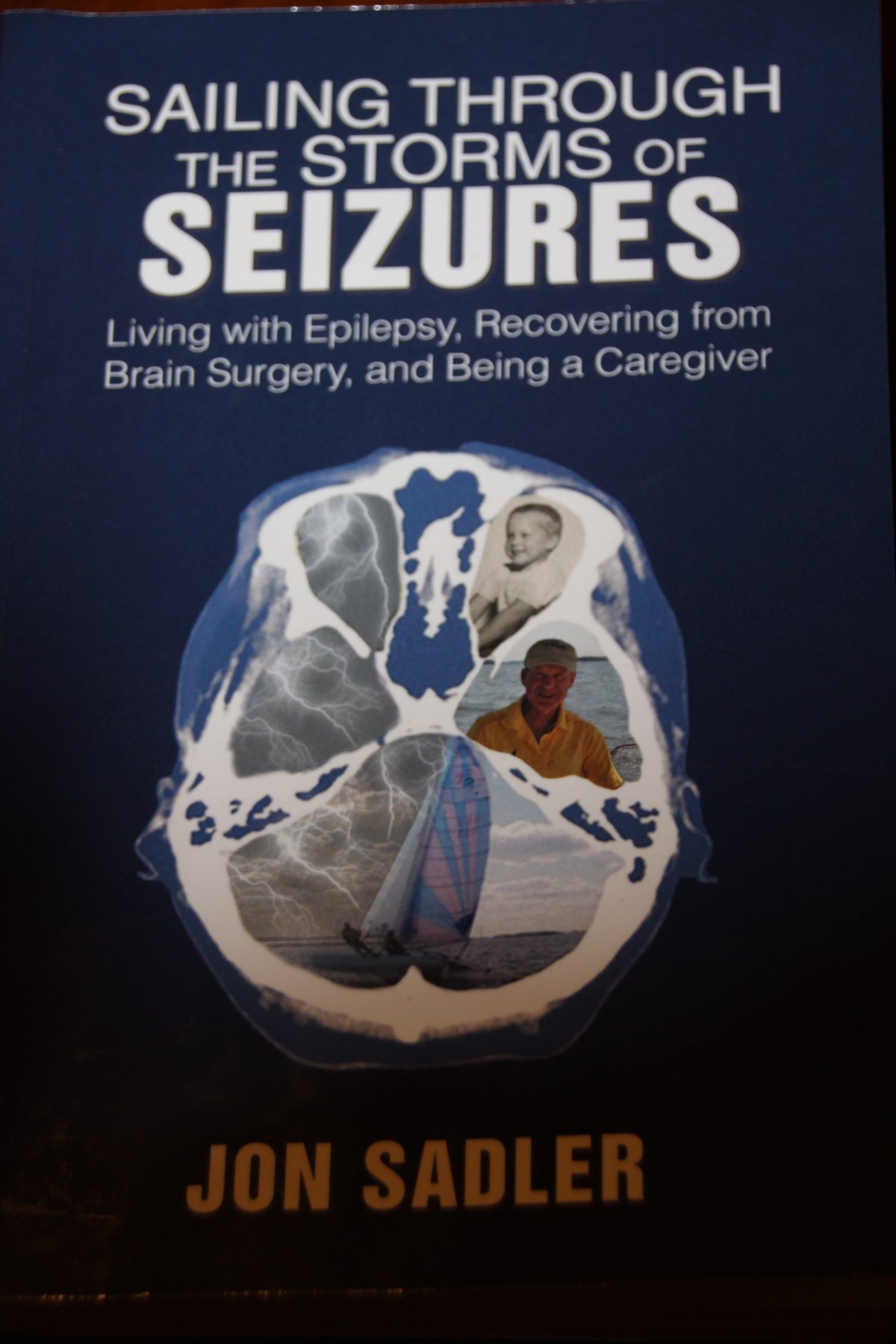
If you feel your epilepsy is holding you back, you may need a dose of Jon Sadler.

I was amazed by his tenacious nature over and over again.

He became an engineer and then earned a masters in counseling.

He sailed boats alone and hiked the Grand Canyon.

He was a scout leader for his sons’ troop.

He kept going through seizures and surgery.

This book will be a confidence booster for any adult with epilepsy.

Jon Sadler shares his amazing history in Sailing Through the Storms of Seizures.

His “no excuses” attitude is catching.IMG_0032


We Will Need You

I have been reading another insightful memoir written by a person with epilepsy.

Each one I read brings back memories of our struggles.

Each also reminds me that this is not over for us.

Epilepsy rarely vanishes.

It does, however, hide for long periods.

Rose does not want to know this.

Neither do I.

So we are living like it is gone while we can.

But when it returns,

we will need you.

It will be hard trying to fit our big lives

back into the confined space of seizures.

While she was home for fall break, she dropped her shampoo in the shower.

It was her habit to say something to let me know she was okay.

She did not say anything. I made myself stay in my bed and listen.

Fear is never far away.

Oh, yes!

We will need you.

(I almost entitled this “She Will Need You”)

We are still tethered together.

Mother and daughter.

Epilepsy and fear.


Kind Kids

Story 24: June 2002

Of course epilepsy came on vacation with us. Rose had three seizures during our week at the beach. Two occurred while she was swimming in the pool. She always wore a life jacket in the water and someone stayed an arm’s-length away. I knew it was risky to let her swim, but she loved it so much. We live on a lake so our family and friends swam a lot. We could not forbid Rose from participating in something we all enjoyed together. If she seized in the water, we just held her until the seizure ended and carried her out to a lawn chair to sleep afterward. We suspected extreme temperature changes triggered seizures, and so we tried to avoid the water in the mornings when it was cooler. We also covered Rose with a towel when she got out so she would not get chilled.
Rose also loved the ocean,but swimming with her among the waves made me a complete wreck. I was afraid we would both go under if she seized in the ocean. She was content to go in for only a few minutes and then play in the tidal pools with her shovel searching for little fish and shells, and building sand sculptures.
One day Rose and I had just walked down onto the beach and picked our spot on the edge of a tidal pool. I set down our bags and towels just as Rose fell face first into the sand. I placed her on her side to seize, as I tried to wipe off some of the sand that stuck to her face. A nice lady nearby offered me a bottle of water to wash her off. The seizure soon ended, but Rose was covered in wet, sticky sand. I swaddled her in a towel and sat close beside her to wait out the thirty minutes or so it would take before she woke up. My family could see us from the porch of the condominium, so I knew help would arrive when someone spotted Rose lying still under a towel.
While I was sitting quietly beside Rose, two boys about her age walked by. They were carrying a surfboard, table-fashion, covered with an assortment of shells and seaweed. They both glanced at Rose as they passed, but soon put down their board and walked back to me. They asked what was wrong with Rose. I explained that she had had a seizure but would be fine when she woke up. I asked about the treasures they were carrying on their board. I shared that Rose would have loved to see their haul from the sea if she were awake. They walked back to their board and one returned carrying a giant pin shell. “Give her that when she wakes up” he said. We still have this treasure.

Seizure Mama speaks to parents:

There will be many children who do not understand seizures Some children will be afraid of your child after seeing him/her seize. There will be a stigma. It will be harmful and painful.
There will also be children with great kindness, who will be protective of your fragile child. They will be loyal friends. Relish the memories of the kind kids. They are the angels of this broken world.

Safety During a Seizure Cycle

IMG_9476Story #22 (Most of  2002)

The drug roulette regimen made everything worse. Rose was not herself before a seizure nor after a seizure. She was lethargic, floppy, and dopey. She moved from her bed, to a chair, to another chair, and back to her bed. The seizures came with us wherever we went. She seized in restaurants, at birthday parties, at Brownies, in the yard, watching television, in a big box store while shopping for a helmet, at a family reunion, in a funeral home and even in swimming pools.
We took a plastic Adirondak chair with us on outings. The chair reclined slightly, so she could seize in it without falling out. For us every party was BYOC(bring your own chair), and of course the seizure bag went with us everywhere. We evaluated the risks of each outing. Should we go eat at this restaurant? No, it would be too hard to carry her out through the gift shop. She we go to a ballgame? No, seizures in bleachers are too dangerous. Should we go? No. Eventually, we stayed home waiting for the next seizure. I really wanted to buy a little wheelchair, so we could go places, but was advised against it by other family members. “Rose would look handicapped and feel handicapped.”  Yes, but she would be safe.
We walked everywhere linked arm in arm with her. A fall could come at any second. We went up and down our stairs as a unit so she would not fall. We called this method ‘stair pairs.’ To go down Rose would put her left hand on the person in front’s shoulder and her right hand on the handrail. The front person would put their left hand on hers and also hold the rail with their right hand. Going up would be reversed with her escort behind her. Rose would announce when she wanted to go up or down and someone would stop what they were doing and escort her. We made it a point to not say no to her requests to use the stairs. There was so much she could not do at this point; at least she could be free to move about in her own house.
When no one was in a room with Rose, her father, brother or I would whistle two notes and she knew to echo the two notes back. We whistled instead of calling her name so she knew we were just checking on her instead of needing her to come to us. We whistled to her about every three minutes. It got to be so much of a habit that I would catch myself whistling notes when Rose was not with me. She slept with me during these terrible months. Sometimes she would whistle in her sleep.

We referred to this technique as “echo whistling.” If she did not repeat our two notes we would call her name. If she did not answer, we would rush to find her. Sometimes she was just too busy to answer, but a few times we would find her unconscious, leaving me feeling feel guilty about leaving her alone. Negligent for three minutes. Shame on Seizure Mama!

Take a chair, echo whistling, stair pairs. This is how we kept her safe as the seizures took over our lives.

Seizure Mama speaks to parents:

You need to devise methods like ‘echo whistling’ and ‘stair pairs’ as part of your everyday routine to keep your child safe. We used two notes for ‘echo whistling’ because Rose had complex partial epilepsy and could do repetitive automations, even at the onset of a seizure. She could probably whistle during these periods, but could not echo the two notes from someone else.

An Epilepsy Memoir

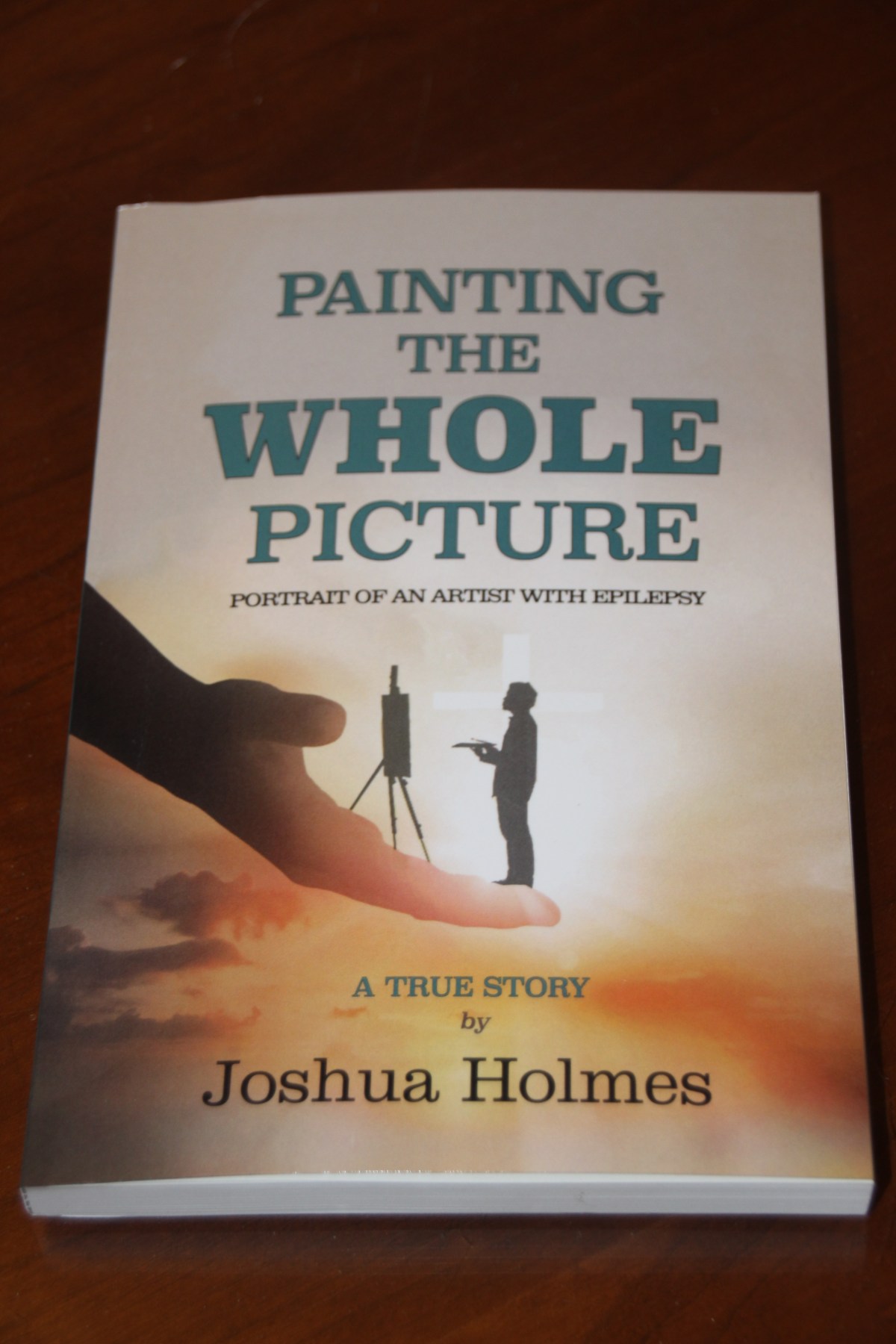
Painting the Whole Picture by Joshua Holmes tells the whole story of life with epilepsy.

I was amazed and impressed by Joshua’s family’s efforts to help him overcome his cerebral palsy and epilepsy. This is a book for families. It’s a good model for how to help children by making  them do things for themselves instead of enabling. Determination was modeled and encouraged.

Joshua shared his various struggles during grade school, college, careers and living independently. These events were not sugar-coated. He let us see the process of resolving problems.

I admire his tenaciousness and courage. I liked that the book included photos of his family and his art. It made me feel like I know him as a whole person.

This book is another great resource for folks with epilepsy and their families.

Joshua Holmes has written other books. You may want to look him up.

Seizure Mama/Flower Roberts

A Great Book for Young Folks

I will be putting this book on Rose’s desk for her to read while she is home.

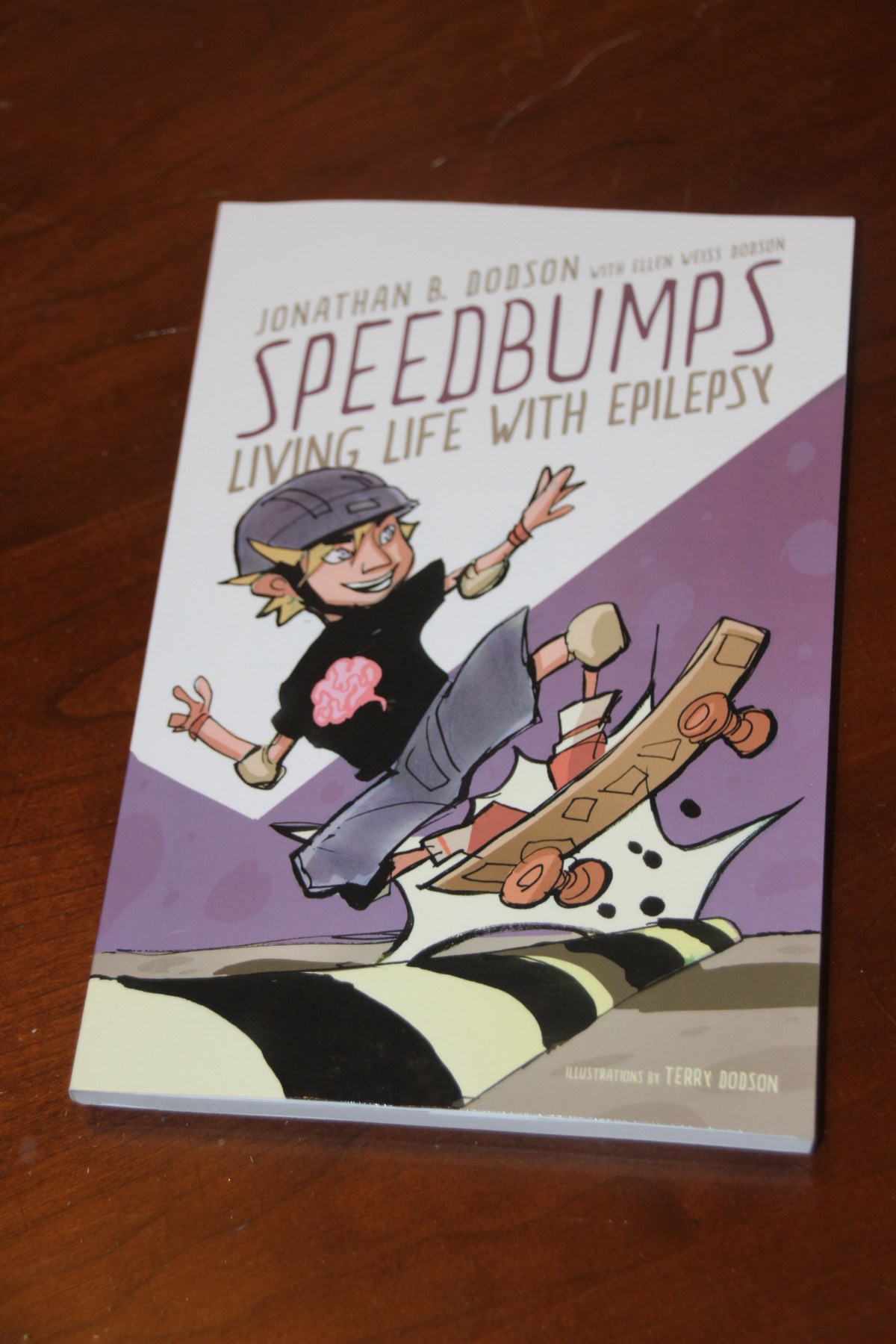
Speedbumps: Living with Epilepsy by Jonathan B. Dodson is his voice telling his story.

The book chronicles his life from his first “speedbumps” and seizures to being an adult.

The book is easy to read and divided nicely.

It does not get bogged down in medical details or side-stories.

His tale is streamlined well so that young readers can read it over a weekend.

This would be a great resource to put in the hands of teens struggling with epilepsy.

I appreciate Jonathan and his family for putting together such a useful book.

BRAVO!

Seizure Mama/ Flower Roberts

Another Epilepsy Book

Seized: Temporal Lobe Epilepsy as a Medical, Historical and Artistic Phenomenon by Eve La Plante was a fascinating read. I found myself talking about it to my family and friends.

If you or someone you know has TLE (Temporal Lobe Epilepsy), I think you will be enlightened by this book.

It is divided up well, so that you can chose whether you are reading it for intervention information or just to learn about the history of this type of epilepsy.

What I found so informative was how the research on TLE has brought together the psychological and physiological disciplines to approach many dysfunctions holistically as both physical and personality disorders.

Bringing together neurology and psychology gives better understanding of people suffering from diseases that were previously under the umbrella of mental illness.

I will add, if you are deep in the throes of suffering health issues and seizures from TLE, this may be more than you want to know. You may benefit from reading the case study part.

If you are trying to understand epilepsy, this is a great resource. I appreciate Eve LaPlante for doing such a thorough job of researching doctors, patients and medical history for this book.

Flower Roberts

That Last Day

On the last day that Rose was home we went swimming in the lake.

We took a long boat ride upriver.

We grilled barbecued ribs and onions.

We tried to fit a whole summer into that last day.

We wanted her to remember home and fun and love

while she was away from us at school.

I am missing my Rose today, but I am super proud of her.

Someday she will be trained to help others during disasters.

She knows all about fear and emergencies.

Who better to be on the front lines than my Rose?

Seizure Mama

Drug Changes Change Rose

Story # 20:

Things fell apart. Drug 4L had been added to drug 3S after the seizures during the holidays. At first drug 4L made Rose mean. Getting her schoolwork done was a battle. Either she would not or could not concentrate. Were these changes due to the new drug, the new homebound situation, or the seizures? Her ear infections continued, so antibiotics were frequently in the mix.
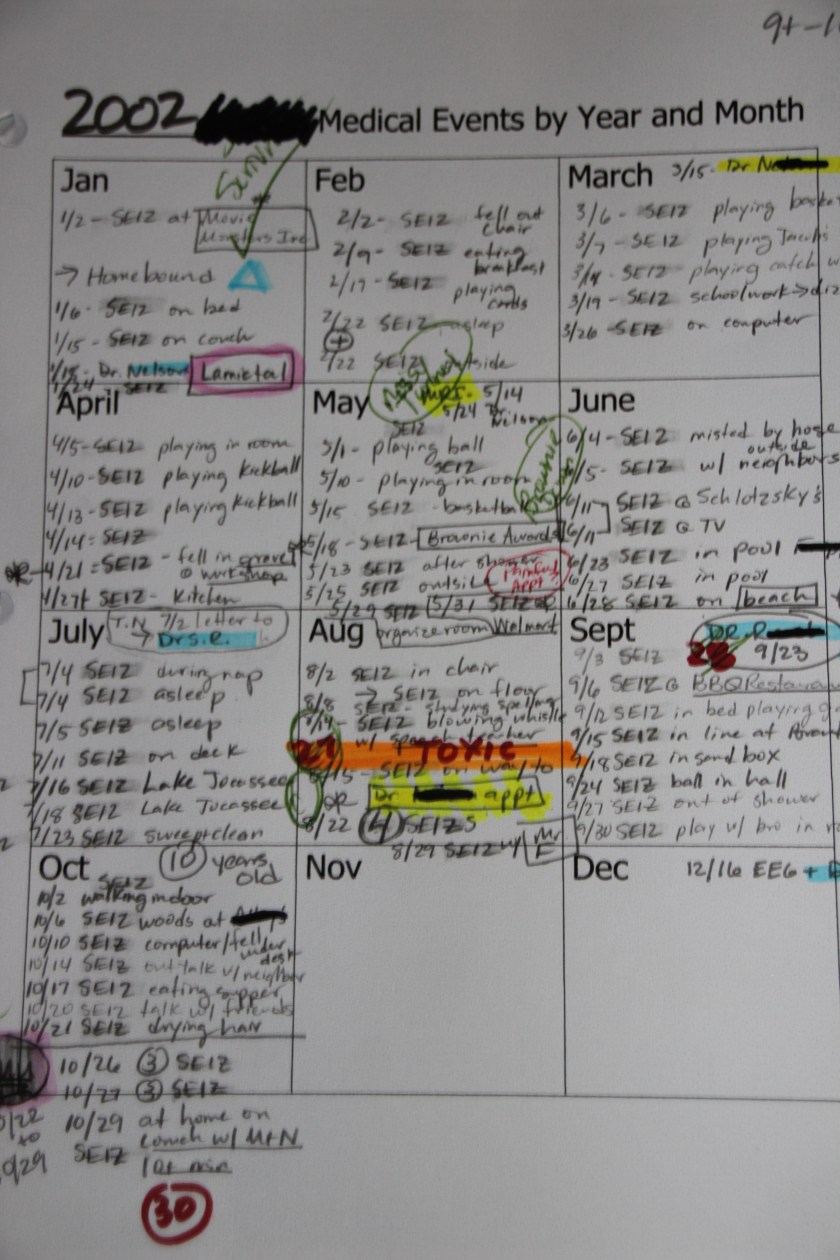
We kept records of all her drug dosages and combinations, along with seizure descriptions on a chart. We couldn’t keep all of it straight unless we wrote it down. The months were a blur of seizures, side effects and sickness. I read books about epilepsy and researched epilepsy drugs and treatments. It was all so confusing. How could we help our Rose if we did not understand this disorder and the effects of its medications? I felt helpless and hopeless. Rose was changing as her drugs changed.
Appointments with the neurologist became very frustrating. The partner of the practice had left, so our doctor was handling a double load of patients. We used to feel like there was a set plan for Rose’s treatment; now it seemed like one long experiment. The doses for drug 4L kept increasing and we saw nothing but side effects. Her seizures became longer and stronger. We must have missed the window of effectiveness for drug 4L. Finally it was dropped and drug 5Z was added to her doses of 3S. Experimenting with the wrong drugs and dosages went on for months. Every few days, Rose would have a long, strong seizure. She would spend a day or two recovering before another seizure knocked her back down. I did not leave her anymore. I was too scared.
Sometimes on the weekends when Rose’s dad was home, Rose’s brother would ride the trails through the woods around our house. I would go with him carrying my camera and a walkie talkie. If a seizure occurred, her dad could call me to come back. I would hike through the woods and allow myself to cry. This was the only time I would leave the house. I walked the paths in our woods relieved to be out of our sad house where the walls kept closing in.
I never let Rose see me cry. We did not want her to see us saddened or scared. We were losing her. Her essence was disappearing. She was a groggy, foggy, tired mess. The drugs were not helping anything. The seizures were wearing her down and the drugs were ruining the time in between them.

Seizure Mama speaks to parents:

I am ashamed to look at the records from these terrible months. Why did we not get a second opinion sooner? Why did we not demand to go to an EMU? The awful reason was that we thought going to the EMU was a big step toward surgery. I had read about the different surgeries that were used to stop seizures. I wanted to give every drug a full chance to work. When I look back at her charts of medication combinations now, I am horrified.
Drug changes were being made frequently and almost in a random fashion. I think the neurologist was on overload and was pushed to try things because of my constant calls and letters. She was seemingly experimenting with various possible remedies.
It took the terrible scare of Rose going toxic for us to decide that enough was enough and seek a second opinion from a different neurologist in a different city. That was a turning point for us. Don’t wait that long.

The Forgotten Fob

We moved Rose back to the university yesterday.

She did all the packing. We just helped load and unload the truck.

Just before we left, as an afterthought, her dad suggested I check the medication drawer.

I did it just to make sure a bottle of medicine had not been inadvertently left behind.

What I found instead made my heart stop.

She had forgotten her fob.
IMG_8323

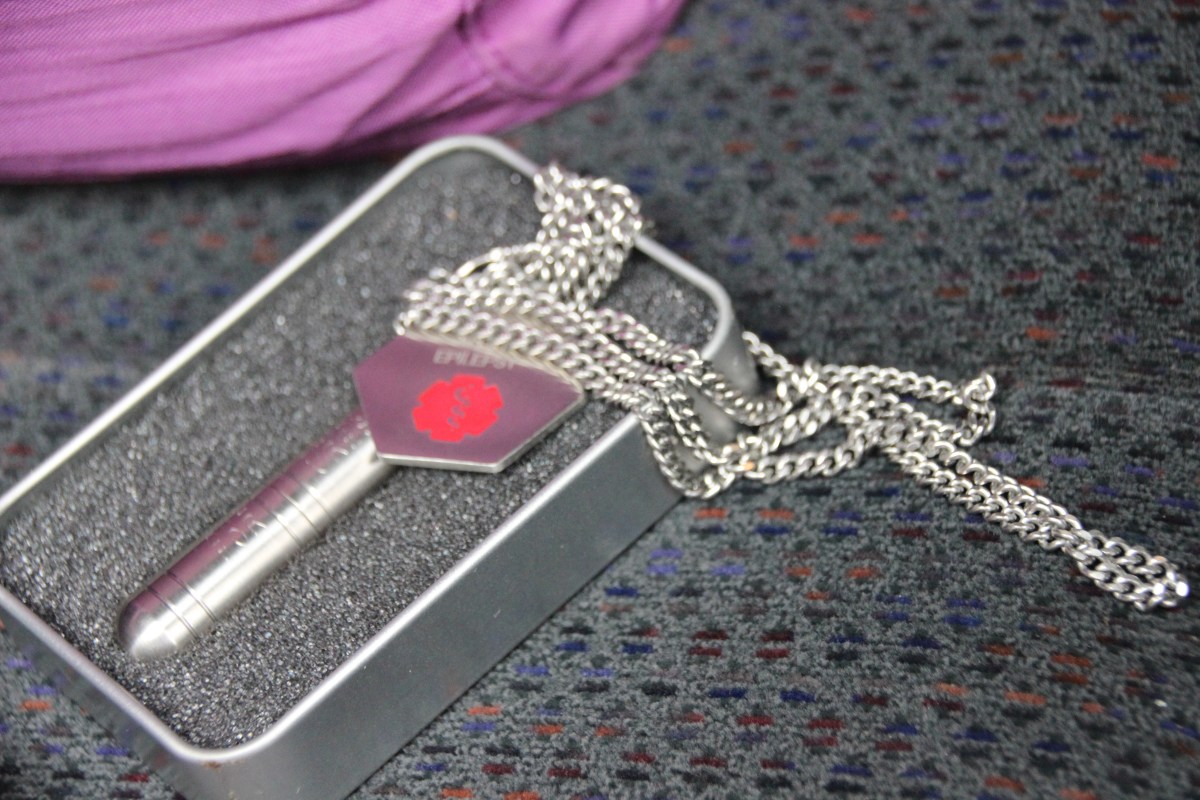
Her necklace with all her epilepsy information and a fob with emergency pills in it.

This is her lifeline.

(I had to pause while typing this and take a deep breath.)

I took the box with the necklace, tag and fob in it to where she was

and held it out for her to see it.

I told her “If you have a seizure and no one knows what to do you could die.”

She nodded and looked down guiltily. Her response was “I did die.”

“Yes,” I replied “but I saved you. I will not be there next time.”

She has had her helicopter mama all summer. Maybe she just forgot where it was?

Maybe she wants to believe epilepsy has left her.

It is a nice dream.

But she must be prepared for the next seizure, even if there never is one.

This epilepsy belongs to Rose now.

I hope she will not forget the fob again.

Seizure Mama = standing down.