Expecting and Accepting

Story 12:

Rose enjoyed her year in kindergarten. Her first grade teacher was a delightful, experienced woman. I was the volunteer Rainbow Reader for Rose’s classroom. I enjoyed my time in her room with the students. I went to her class each week and read books out loud to her class. There was always a lot to do in her classroom. The teachers in early grades were expected to assess each child individually. This meant that support was needed for those weeks as the teacher performed the one-on-one assessments with students. I was a certified teacher, so I understood this and was glad to help.
Rose was a good student and an advanced reader. I am not sure whether she was making progress during this year or succeeding due to former learning. We did notice that her hands were shaking when she tried to do certain fine motor activities. Her crayon coloring did not stay inside the lines. Her drawings were sloppier than they used to be. She also had some hearing difficulties. Her hearing was tested and accommodations were made. When some test results came home saying she had reading issues, I had her retested with the evaluator sitting on the side of her “good ear.” The second test results were improved.
Second grade got much more difficult. Because standardized state testing began in the third grade, the second grade teachers were expected to prepare their students for this upcoming year. Rose had a hard time keeping up. The math quizzes were timed. Missed problems were to be worked out and copied over at home. Missed spelling words were also sent home to study. Rose became very frustrated fast. The timer made her nervous. I was not sure she could hear the spelling words. Things were falling apart.
I did not realize how bad things had gotten until report cards came out. It wasn’t her grades that concerned me. It was her tardies. Every morning her brother and she were let out of the car at the same time. He would get to class on time, but she would be late. When I asked her about this, She explained that she stopped to get water, or peek into the library, or walk by her former classroom. In other words, she wandered around the school until the bell rang. This was not safe for her. It was also a sign of her dreading to go to her classroom.
I understood Rose’s frustration. We were struggling with all her “re-do” work at home. But as a former teacher, I knew the pressures Rose’s teacher faced in pushing her students. I remembered Rose’s neurologist warning the we may need to adjust our academic expectations. The drugs were slowing her down, but I did not want to accept this.
I was finally pushed to consult the teacher when my wise father asked me if he needed to make an appointment with Ms.C. I requested a much needed conference with Rose’s teacher. We worked together to augment Rose’s assignments to include shorter spelling lists, and more time for math quizzes. This was the first step in accepting that our academic expectations for Rose had to be altered. It was not fair to Rose to push and overwhelm her.

Seizure Mama speaks to parents:

Pay attention to everything. Is your child happy to go to school? Does he/she finish lunch? Does he/she talk about friends? What does your child do during recess?
So many times I was alerted to problems by some random comment. It is hard to catch every detail when you are busy and have other children. Pause often and try to picture what your child’s day is like. Listen for clues. I still do this when Rose calls home from college.

Mama Goes to Kindergarten

Story 11:

Rose and I started kindergarten together. The first two weeks were half days, so the teachers could make home visits in the afternoons. Our plan was for me to stay with Rose at school until her teachers came to our house for the home visit. They knew this plan and could have scheduled our home visit earlier. Rose and I were both known at the elementary school because Rose’s older brother was there. I had been involved in the Parent Teacher Association and volunteered often.
I will always remember those two weeks of constant action. Rose’s teacher and assistant were both amazingly patient and pleasant women. There was constant activity every minute of the day, even during nap time. I found it exhausting, but very entertaining. I felt really good about Rose being with these two women. I knew, despite their many responsibilities, they would take care of Rose as best they could.
The day of the home visit arrived. Rose served her teachers brownies and lemonade. We talked briefly about funny events that had occurred during the first weeks of kindergarten. Rose was happy to have her new teachers in her home.
They both sat on the couch as I demonstrated how to handle a seizure using Rose’s large stuffed cow, Lovey. I described how a seizure might start and then placed Lovey on her side. I opened Rose’s big red seizure bag that was to stay in the principal’s office. I put a rolled towel from inside it under Lovey’s head and pulled out Rose’s emergency medication and pretended to administer it to the cow.
After I finished the demonstration, I looked into the teachers’ faces and waited. Would they handle this for us? Could they do this? Were they willing to take this on? Most importantly, was I going to have to spend the year in kindergarten?
They looked at each other. Then looked back at us. Ms.J said, “We can handle this.” I couldn’t believe what I heard. Just because public school is obligated to make accommodations does not mean they gladly do it. Ms.S said they both knew how to handle seizures. One had a husband who had epilepsy, the other had seizures herself and was taking the same medication as Rose was. The principal knew all this. That’s why he put Rose in their classroom. I felt so blessed to have these two women be part of Rose’s team. What a relief and a gift. I will always be grateful to these two wonderful women.

Seizure Mama speaks to parents:

A “seizure bag” went wherever Rose went. In it were several towels, a change of clothes, wipes, paper towels, and a bottle of water. Her emergency medications came in packs of two syringes and were somewhat expensive. One was kept in the big red bag at school, the other one in my purse. These emergency drug syringes could not be left in the car. The drug could not get too hot or too cold, so the syringe stayed with me. This meant that I carried an over-sized purse for years. I rolled the sealed syringe in a bandanna scarf to protect it inside my cluttered purse and used the bandanna to cover Rose during a seizure. This is how you live with epilepsy on the go.

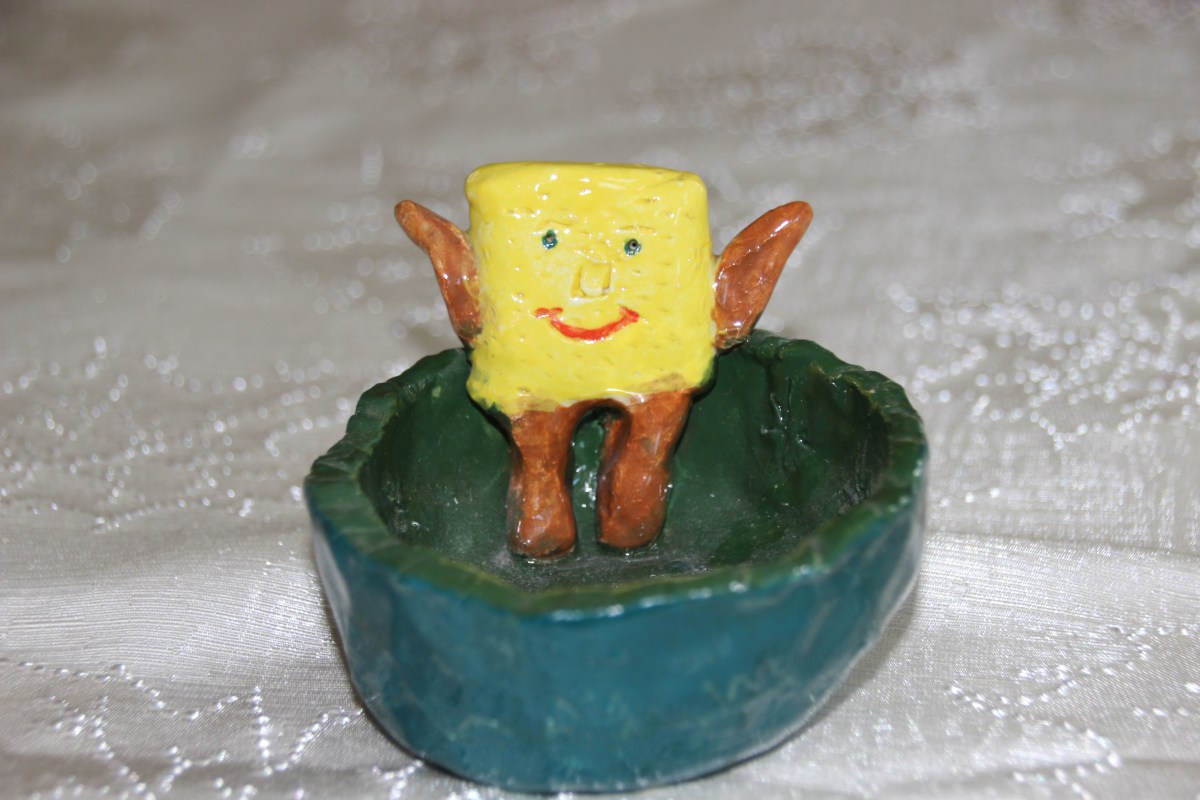
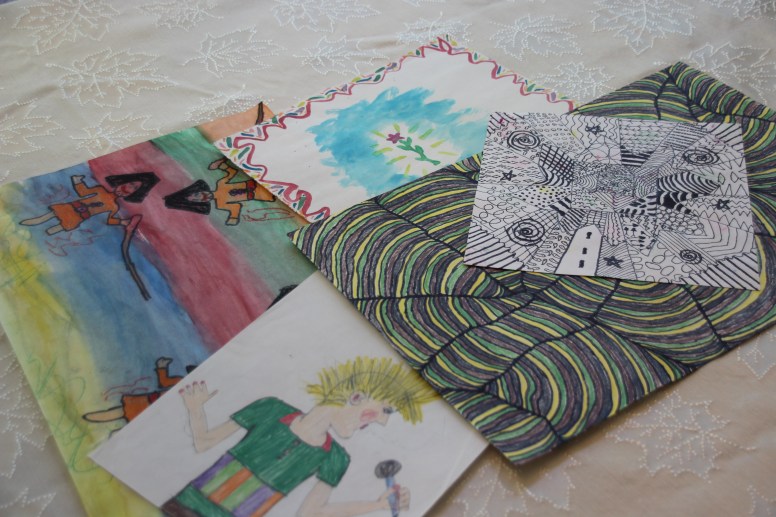
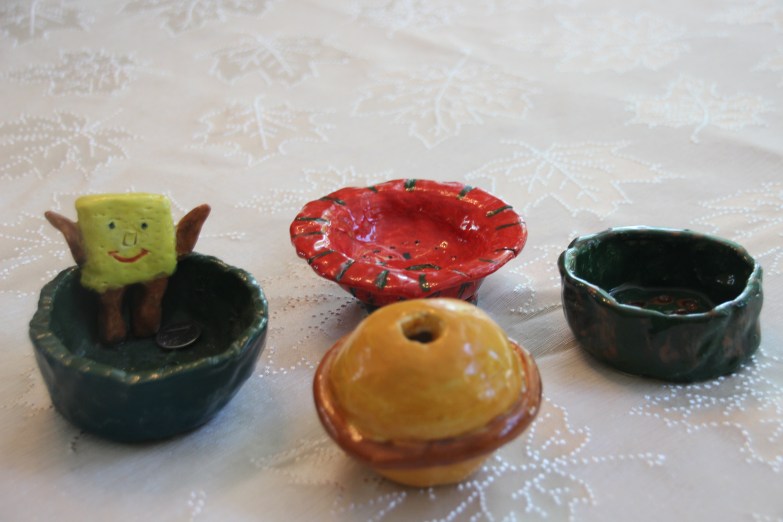
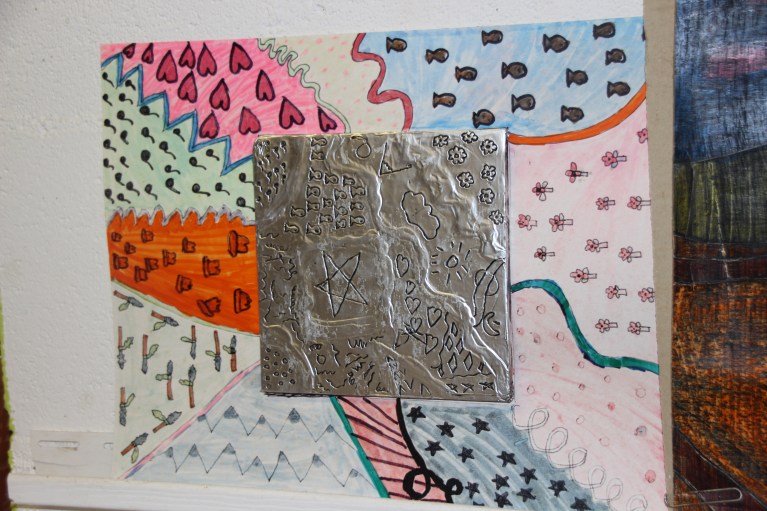
The Art Stayed

Rose was home bound several times during her twelve years of public school.  It was during these periods that we saw her academic struggles up close.

She would go from knowing her multiplication tables to not remembering them, but the art stayed.

Rose could spell words one week and forget them the next, but the art stayed.

She would read a story and forget the names of the main characters, but the art stayed.

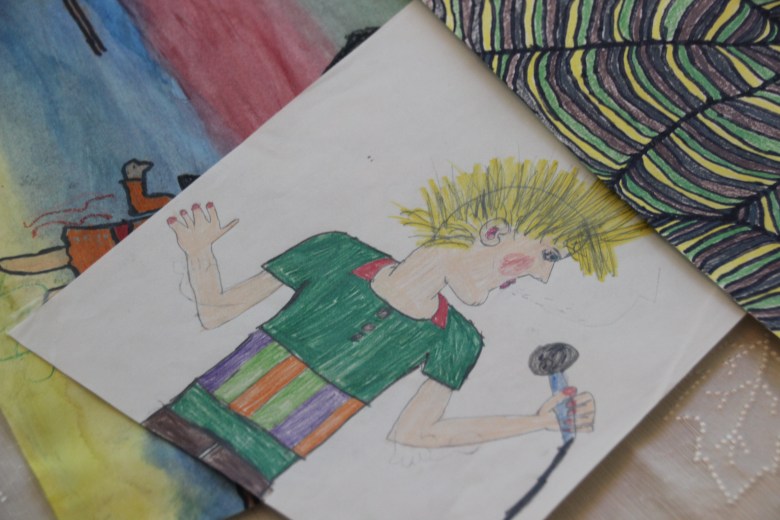
When everything else seemed to be flushed from her brain by seizures and side effects, she could still mix a perfect flamingo pink paint and create beauty with her shaky hands.

There were times when we gave up on academics and just did art.

When nothing would go in, the art still came out.

Her teachers were understanding through these roller coaster rides.

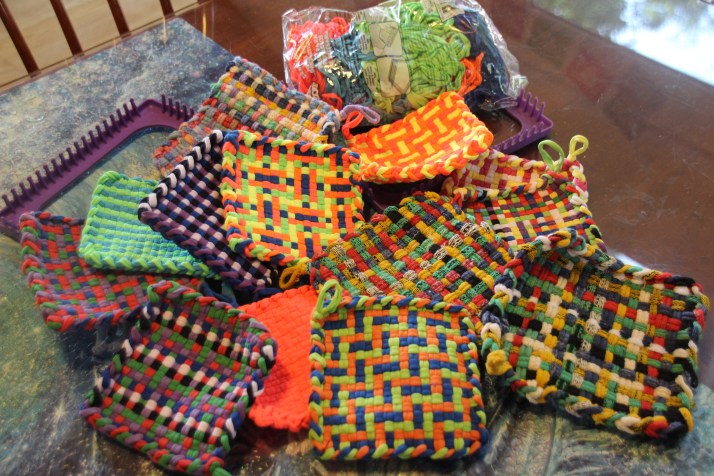
When she was stuck in the Epilepsy Monitoring Unit for days at a time, Rose made hotmats. She asked the healthcare workers which colors they wanted and custom made them for people. It was a great way to keep her busy. The nurses and staff thought it was super cute.

When the academic struggles get to be too much for your child,

draw their spelling words, make a math collage, make up a story…

Sometimes it is better to pause than to pass.

Seizure Mama speaks to parents:

I am a former teacher. I knew how important it was for Rose to not fall behind in school.  I also knew how unimportant it was for Rose to fall behind in school.

While she was home bound in grades 3 and 4, her teachers and I refused to frustrate her by pushing the curriculum. One of her teachers said it was like trying to teach a blind person colors.

We worked to keep her moving forward in any way that worked. Art always worked. It was also a way to reassure all of us that Rose was still in there, through all the seizures and side effects.

They could have been terrible times, but we did not let them be terrible. Sometimes you have to let go of the agenda and go with the flow.

Seizure Mama/Flower Roberts

Epilepsy Blog Relay Post: June 23, 2019


Preschool for Two: Story 10

After the series of seizures in the hospital, drug 2D was weaned down and replaced with drug 3S. This new drug was sprinkled onto pudding or peanut butter. The new set of side effects to watch for were hair loss, increased appetite, and learning issues. Well, at least her gums were safe now!
Rose’s birthday is in October so she was either going to be older than her classmates or much younger. Since she was small and had health issues, we had chosen to keep her in preschool an extra year before starting public school. We were glad that we had done this in view of all these ear infections, drug transitions, and seizures. I wore a beeper on my belt at this point. I would drop her off at preschool and go walk at a park down the road or visit grocery store located just across the highway. I was never more than two minutes away. Rose and I were tethered together out of my fear. These Mother’s Morning Out days of preschool were our only break from each other.
Our family loved this preschool. We knew all the teachers well since Rose’s older brother had attended there a few years earlier. The one person on the staff who was not my friend at the time was the director. She was gruff and blunt. She said what she thought without any sweet Southern filter.
When Ms. B heard about Rose’s surgery and the following series of seizures, she phoned us. She informed us that the church preschool could not be responsible for handling medical emergencies. The teachers were not trained for these. Rose was a liability risk. This was hurtful to us, but I also understood it. Rose’s teachers truly loved her and if anything happened to her on their watch, they would have been devastated. By law, public schools have to accommodate students with special needs, but churches do not.
Our options were to pull Rose out of her preschool or have me stay in the building every day while she was there. We were not going to tell Rose at the tender age of five that she was not welcome back into her beloved preschool because of her seizures. Instead I simply stayed at the church every day. The staff knew that I was upstairs in an empty room near the director’s office. I was only a shout away if needed. I read books and studied. Other mothers and teachers dropped by for visits. The director came by to check on me. I began helping her out with needed tasks. Then I cataloged all the children’s books and repaired them. I even substituted when other teachers were sick.
The experience was good for all involved. Rose got to stay in school and her teachers did not need to worry because I was close by. The director and I became good friends.
When Ms. B would drop by to check on me everyday, sometimes I shared my worries. Once when I was obsessing about an upcoming event, she said, “Don’t cross the Fox until you cross the Fox.” She then went on to share that this was some advice from Abraham Lincoln. Apparently there was a Fox River. As folks traveled toward the river they worried about whether the river was up too high or moving too fast to get across. Lincoln was reminding folks to wait and “cross that bridge when you get there.”
Once Ms. B caught me crying. I was overwhelmed by all the hoops we were having to jump through to get help for Rose. She looked into my eyes and asked, “How do you eat an elephant?”and then answered, “One mouthful at a time.”
Seizure Mama speaks to parents:

Forcing the responsibility for your child’s safety onto others is not fair to them or to your child. If your child’s seizures can be dangerous or even life-threatening, you want a willing and competent person in charge of his/her care. You must be an advocate and an assistant. People fear what they do not understand. You must educate the people around your child about epilepsy. Yes, there is a stigma. There will be some shunning. But if you confidently share information with others, there will be no surprise,or public revelation to dread. We were always open about Rose’s epilepsy. This is so much better that trying to guard it like a secret. Be brave and honest. Would you hide your child’s asthma or diabetes? Of course not. Then do not hide this condition. There should be no shame. If your child senses your shame, he/she will feel ashamed of it,too. Do not hand them a handicap.

Adultish

Rose bought a shirt with “Adultish” across the front.

She said it was soft and on sale. She thought it was funny.

When she wears it, I think of how we got to where we are now…

an old, tired mama with an adultish daughter.

Rose should be socially-smart and savvy at twenty-six.

She is not. It’s not her fault.

I blame epilepsy and me.

I have been the helicopter mother from hell.

I camped out at her preschool, because it was required by the church.

I volunteered at her elementary school…

when she was not home bound due to seizures.

I taught at her middle school, her high school was across the road.

I taught at her community college while she was there.

She used to refer to herself a “24/7” because she was with me 24/7.

We were tethered together for twenty-four years.

I ran block for her in too many incidences.

Over-protecting and over-compensating.

Mama bear on super strong steroids.

Trying to level the playing field for my fragile baby.

NOW, I am old and exhausted and Rose is adultish.

She says she needs the freedom to make her own mistakes.

Mistakes at twenty-six are so much bigger than mistakes at twelve.

I am ready to turn over the reins, but is she ready to take them?

She trusts and loves everyone like a child.

I am judgmental and paranoid where Rose is concerned.

I have a big heart too, but I will take down any threat to this adultish daughter.

We both worked very hard to get to this point in our relationship.

I will stand down as she steps up.

The mother-daughter dance is complicated.

Epilepsy has made it difficult.

Love is our music.

Seizure Mama

My Hobby and My Mission

My hobby gives me so much joy.  It comes naturally to me. It’s easy.  It’s fun.

It is gardening.

I have chlorophyll in my blood. I come from a long line of plant people.

I love gardening and I love blogging about my garden.

My mission, on the other hand, is hard.  It causes me sorrow.

Twenty-four years of taking care of Rose while waiting for the next seizure or side effect was difficult.

Remembering these experiences is painful.

Writing about these struggles sends me back in the trenches.

Why do I do it?

Because I know how it feels to fight a losing battle; day after day after day…

I know how it is to feel unlucky, cursed and damned.

I can’t stand thinking that other mothers are doing it alone.

So I will stay the course.

Sending out a beam of light to a mama in her darkness.

Hang on Sister!  Flower is here.

Seizure Mama/Flower Roberts

Trouble at the Lab

Story #8 Gilligan at the Lab:

Rose’s drug 2D required periodic lab work to check blood levels.She has always been a passive patient. I did not expect her to resist any treatments based on prior experience. So, I was surprised when we had a struggle getting some blood drawn at the local hospital.
We waited in the waiting room to be called. I thumbed through magazines while Rose sat near the television. When her name was called, I picked her up to head back to a room. She squirmed, so I switched her to my other hip. The lab technician was a middle-aged man. Since Rose was small, she was positioned lying down on a table for blood to be drawn.
“No, wait!” she said.
“But we need to get your labs done. It’s our turn.” I reminded her.
“No, wait! ” she yelled. Rose began to squirm and cry and point at the door.
The man asked if he should tie her down to the table. Now, Mama wanted to yell.
I explained that Rose usually did not resist labs. I also pointed out that if we tied her to the table today, we would have trouble just getting her in the room next time. I took Rose back out to the waiting room. I calmly resumed looking at magazines and she went back to watching the television. I nonchalantly told her to let me know when she was ready to get her labs done.
I kept peeking out from the magazine, watching her. What was different about this time? It was not long before she came and stood beside me. I glanced up from my magazine. “Ready,” she said.
I informed the receptionist at the desk that we were ready to try again. Her name was called. We went back into the room. She calmly lay on the table. The blood was drawn without incident.
As we were walking back through the waiting room to leave, Rose pointed to the television and said, “No more Gilligan.”
She did not mean she wanted to “wait” to get the blood work done. She wanted to go back to the waiting room and finish watching Gilligan’s Island.
Seizure Mama speaks to parents.
All the tests and labs that may be required for treatment of epilepsy may be confusing to your child. You need to put up a good front. They will follow your lead if you act matter-of-fact about the procedures. Discuss what is about to be done. You may even want to draw a picture of the needles and wires. That way they will know what to expect.
I knew that if I let this lab technician tie Rose down to the table this time, that I could not even get her back into a room next time. She would, however, be happy to come back to the lobby to see Gilligan.

Giving Up is Not an Option

I can not give up on my mission as Seizure Mama because I know that there are mothers out there who feel alone in their struggle with a child with epilepsy.

YOU ARE NOT ALONE.

I have been where you are. You will get through this.

Part of my heart belongs to you.

I will not give up on you, just like I did not give up on Rose.


Our First Neurologist

Story #7 The First Neurologist:

Rose’s first visit to a neurologist was months after her first officially epileptic seizure. During the previous months she had tried one drug that failed and was on a second that was prescribed by her pediatrician. Many tests had been run including an electroencephalogram(EEG). She had experienced a second big seizure. We were anxious to learn everything we could from this appointment.
Dr. T’s diagnosis was complex partial epilepsy. This meant that Rose’s seizures started in a certain place in her brain and then generalized to a full seizure know as grand mal or tonic clonic. This made sense to us because her febrile seizures started with chin twitching. Rose referred to these as a “tornado in her mouth.” She could not speak during these episodes, but she could point to her mouth. That little aura served as a warning that was so helpful in those early days. The “tornado” aura soon disappeared, so that we were all surprised by Rose falling to the floor.
Since her seizures were lengthy, Dr.T advised us to get CPR training. She recommended that we call 911 for any seizure lasting more than five minutes. We knew that longer seizures meant danger to her brain and her life. Her dad, brother and I vigilantly watched her, but since Rose was a very active little girl, this was not easy. Our family started tag-teaming “Rose watch” duty. She always stayed within earshot of the person responsible for her.We made sure someone was always nearby and alert.
The neurologist evaluated Rose physically and mentally with simple tests. She was extremely bright and was evaluated as entry-level first grade, although she was just entering her last year of preschool. Dr.T instructed us to watch for developmental backsliding and side effects involving Rose’s gums. After our experience with her first drug 1T we knew that such changes were plausible. We hoped that this second drug would do its job without the side effects.
The plan was to stay on drug 2D for three years and then slowly wean down and off if no more seizures occurred. We were glad to hear that these childhood seizures might eventually diminish. Our new goal was three seizure-free years.
We jumped through all the seizure-prevention hoops. Rose took all medications on time. She was encouraged to take afternoon naps even if it was just quiet time in her bed. We diligently watched for fevers and treated each immediately with a red or pink over-the-counter non-steroidal anti-inflammatory drug(NSAID).

Seizure Mama speaks to parents:

The term SUDEP(Sudden Unexplained Death from Epilepsy) was not coined at this point. We knew that during Rose’s first long seizure her heart may have stopped. We knew that the longer and stronger the seizures were, the more dangerous and life-threatening they were. This was always in the back of our minds. It is still in the back of our minds. Rose is twenty-six years old and away at college, but that fear still remains here. You must go on with your life despite this threat. Uncertainty is present in every life; you just got yourself a big ol’ dose of it to hide somewhere.

The Technology Tumor

Long before the rest of the population was hooked up to technology,

Seizure Mama was wired.

My first two technology tumors were a beeper and bag phone.

For you young people, a bag phone back then weighed about thirteen pounds.

It was the size of an encyclopedia.

If there was an emergency with Rose,

the beeper went off with the number of the person who called.

I would unzip my “encyclopedia” and call them back.

I carried this phone in a giant purse or backpack everywhere I went.

When I want to whine about having to wear a little pack with my phone in it now,

all I have to do is think back to the beeper and bag phone days.

That shuts Mama right up.

Seizure Mama